
Anglo-Saxon/Old English Words
20 – 25% of Modern English words areAnglo-Saxon/Old English in origin.
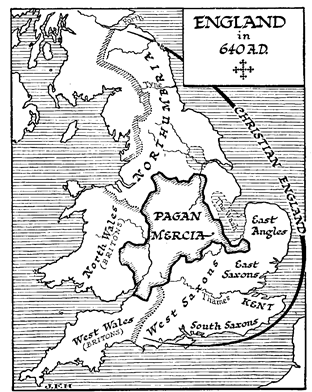
These words date back to 449 A.D., whenthree tribes—the Angles, the Saxons, andthe Jutes—invaded the country nowknown as England from the country nowknown as Germany.
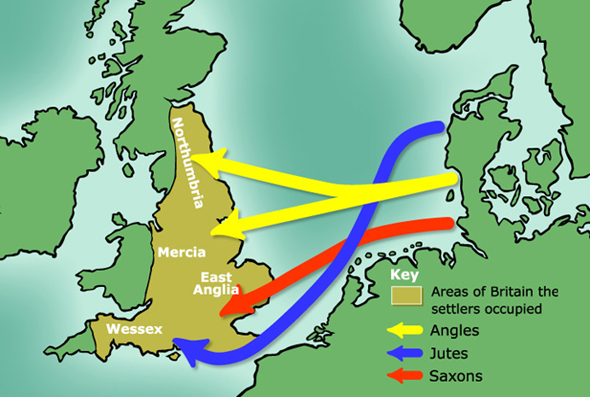
The Invasion of EnglandThe Anglo-Saxon Invasion of England
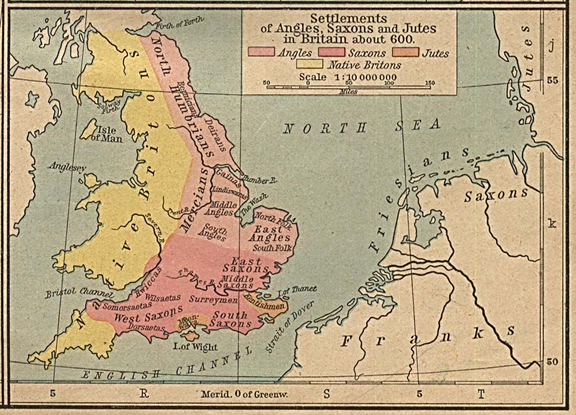
A n g l e s
The Invasion of EnglandThe Anglo-Saxon Invasion of England
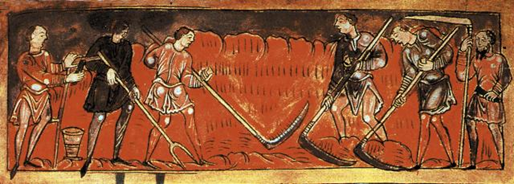
The Anglo-Saxons were very primitive people.They were hunters, farmers, and fishermen.
As a result, the words they gave to Englishare short, simple words seen every day.
English WordsAnglo-Saxon/Old English Words
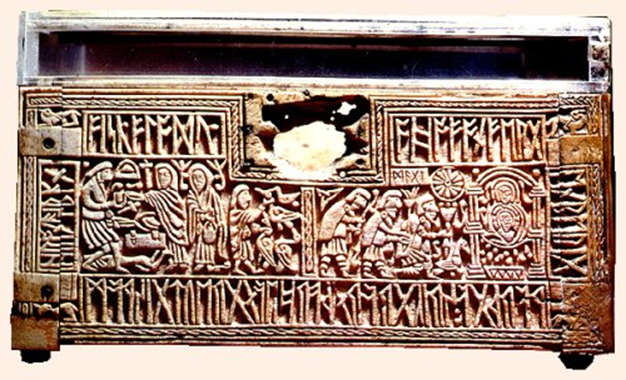
Before the Christianization of England, the Anglo-Saxons wrote using a series of runes such as these:
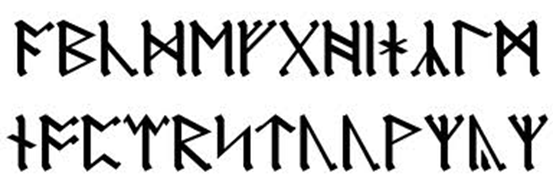
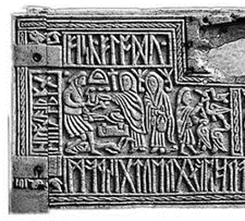
The runes were all made of straight lines, which madethem easier to carve. Runes were often carved onprecious objects - like ivory boxes or stone monuments.
Anglo-Saxon/Old English Words
Anglo-Saxon/Old English Words
The word RUNE means “secret” or “mystery.” Runes hadreligious meanings and were used in religious ceremonies.They were used as charms or spells and to write messages.
This is why “TO SPELL” (meaningto put down the right letters inthe right order) and “A SPELL”(as in a magic spell) are the sameword in English. The Anglo-Saxonsbelieved that using runes in theright order could produce magic.
Anglo-Saxon/Old English Words
Even our words “READ” and “WRITE”are connected with runes.
Anglo-Saxon/Old English Words
The Anglo-Saxon word writan (“to carve runes”)became the word “write” in Modern English.
The Anglo-Saxon word ridan (“to interpret runes”)became the word “read” in Modern English.
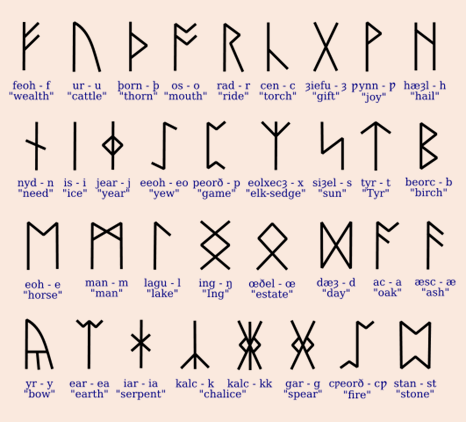
Each rune had its ownname and significance.
Example:
This diagram showssome runes, theirnames, and theircorrespondingletters/sounds in theour alphabet. Noticethat Anglo-Saxon hadsome sounds (like æ)
that we no longer use.

= feoh(wealth)
(th)
Anglo-Saxon/Old English Words
Anglo-Saxon/Old English Words
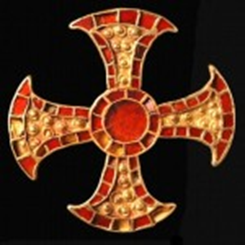
When Christianity spread to England in the 600s, LATINbecame part of the Old English mix, since Latin was thelanguage of the Christian Church. When the Anglo-Saxonsbecame Christians, they began to work the Roman alphabetinto their writing while gradually phasing out runes.
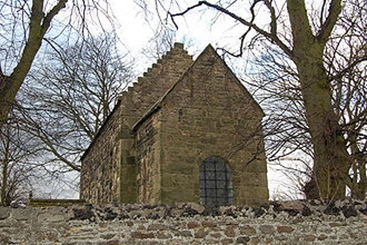
The Christianization of England
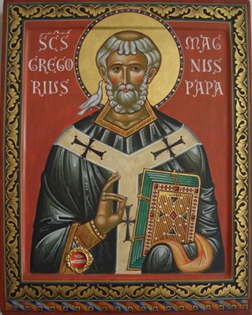
St. Gregory the Great, the poperesponsible for sending a missionfrom Rome to England to convertthe Anglo-Saxons to Christianity
The Christianization of England
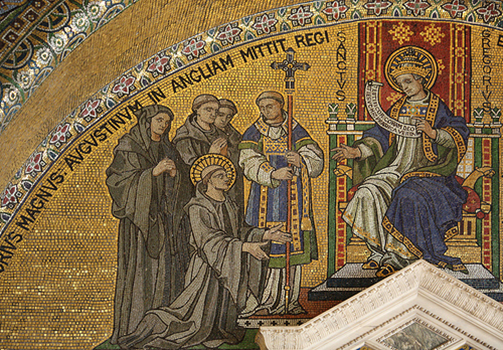
Translation of Latin:
“Gregory the Great sends Augustine into England to the king”
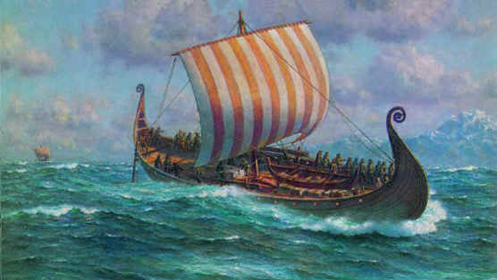
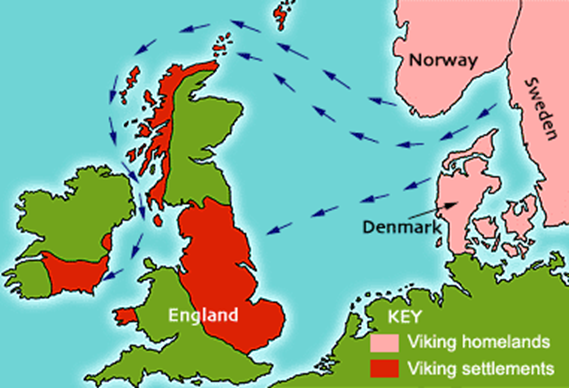
When the Vikings invaded England in the 700s,their language also became a part of Old English.
Anglo-Saxon/Old English Words
The Viking Invasion of England
So, “Old English” is a mixture of:
Anglo-Saxon
Viking Languages
Latin
Anglo-Saxon/Old English Words
Anglo-Saxon/Old English Words
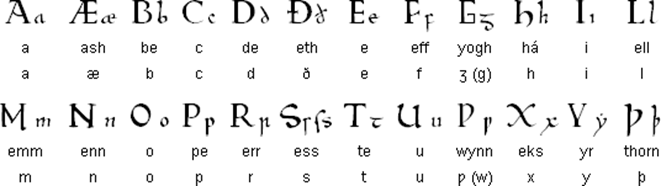
The Old English alphabet consisted of twenty-four letters.
Twenty of these letters directly came from the Latinalphabet, two were modified Latin letters (Æ, Ð), and twodeveloped from the runic alphabet (Ƿ, þ). The letters K, Q,and Z were not in the spelling of native English words.
Anglo-Saxon/Old English Words
Here is a page of Old Englishtext taken from the Anglo-Saxon epic Beowulf.
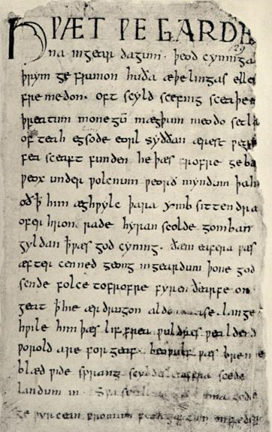
epic – n. – a long poem,typically derived from oraltradition, narrating thedeeds and adventures ofheroic or legendary figuresor the history of a culture
We will now become “Word Detectives” and learnclues for identifying Anglo-Saxon/Old English words!
Anglo-Saxon/Old English Words
CLUE #1
o
n
e
t
w
e
n
t
y
n
i
n
e
t
y
h
u
n
d
r
e
d
f
o
r
t
y
-
s
e
v
e
n
(The numbers one to a hundred - “cardinal numbers”)
Anglo-Saxon/Old English Words
The “ordinal numbers” (first, second, third, etc…)are also Anglo-Saxon/Old English.
Anglo-Saxon/Old English Words
CLUE #1
one
twenty
ninety
hundred
forty-seven
r
e
d
b
r
o
w
n
g
r
e
e
n
(Most of the basic color words)
p
u
r
p
l
e
Anglo-Saxon/Old English Words
CLUE #2
Anglo-Saxon/Old English Words
“Fancy” color words, such as beige, magenta,chartreuse, etc…, are NOT from Anglo-Saxon.
red
brown
green
purple
CLUE #2
p
i
g
c
o
w
d
e
e
r
s
h
r
i
m
p
f
o
x
(The names of farm, forest, and ocean animals)
Anglo-Saxon/Old English Words
CLUE #3
pig
cow
deer
shrimp
fox
Anglo-Saxon/Old English Words
CLUE #3
Since the Anglo-Saxons were farmers, hunters, and fishers,it makes sense that the names of most farm, forest, andocean animals have their origins in Anglo-Saxon/Old English.
farm
plow
crop
field
Also, many words related to farms, forests, andoceans are also from Anglo-Saxon/Old English:
hunt
forest
tree
branch
leaf
dirt
boat
water
wade
stream
net
CLUE #3
Anglo-Saxon/Old English Words
(The outer body parts)
a
r
m
h
e
a
d
l
e
g
f
o
o
t
e
a
r
Anglo-Saxon/Old English Words
CLUE #4
In addition, the names of inner body parts that a huntermight use (or that you might hear in a horror movie) alsocome from Anglo-Saxon/Old English:
bone
heart
liver
lung
blood
rib
guts
skull
brain
If it’s a “gross-sounding” name for an inner body part, it’sprobably from Anglo-Saxon/Old English.
Anglo-Saxon/Old English Words
CLUE #4
However, if it’s an inner body part name that adoctor might use, or that you might hear in scienceclass, then it is from Latin or Greek, NOT AS/OE:
stomach
intestine
sternum
skeleton
trachea
thorax
arteries
epidermis
lumbar
Anglo-Saxon/Old English Words
CLUE #4
(Short, common, everyday words)
Anglo-Saxon/Old English Words
r
u
n
t
h
e
p
l
a
y
w
o
r
k
a
n
d
CLUE #5
run
the
play
work
and
Anglo-Saxon/Old English Words
CLUE #5
The Anglo-Saxons were very simple people. Many of thewords they added to English are short, one-or-two-syllablewords that we use all the time.
l
a
u
g
h
c
o
u
g
h
h
i
g
h
t
h
i
g
h
r
i
g
h
t
(Words with gh)
Anglo-Saxon/Old English Words
CLUE #6
Both the “g” and the “h” were originally pronounced. Thesedays, the “gh” either sounds like “f”(cough) or is silent(right).
Anglo-Saxon/Old English Words
CLUE #6
laugh
cough
high
thigh
right
p
i
c
k
d
u
c
k
k
i
c
k
m
o
c
k
s
o
c
k
(Words with ck)
Anglo-Saxon/Old English Words
CLUE #7
The “ck” is pronounced “k”; the “c” is silent. The“ck” combination means that the vowel is short.
pick
duck
kick
mock
sock
Anglo-Saxon/Old English Words
CLUE #7
k
i
n
g
h
o
o
k
m
a
k
e
k
i
s
s
(Short words with the letter k)
k
i
l
t
Anglo-Saxon/Old English Words
CLUE #8
The letter “k” is usually used before the letters e, i, or y.When “k” is the last letter in a word, it usually comes aftertwo vowels or a consonant.
king
hook
make
kiss
kilt
Anglo-Saxon/Old English Words
CLUE #8
Long words with “k” are probably Greek in origin.
king
hook
make
kiss
kilt
Anglo-Saxon/Old English Words
CLUE #8
There is no “k” in Latin.
king
hook
make
kiss
kilt
Anglo-Saxon/Old English Words
CLUE #8
k
n
e
e
k
n
i
f
e
g
n
a
t
k
n
o
c
k
(Words that begin with kn or gn)
g
n
a
r
l
g
n
a
s
h
Anglo-Saxon/Old English Words
CLUE #9
knee
knife
gnat
knock
Both letters in “kn” and “gn” were originallypronounced. Over time, however, the “k” andthe “g” became silent.
gnarl
gnash
Anglo-Saxon/Old English Words
CLUE #9
t
w
i
n
t
w
i
l
i
g
h
t
b
e
t
w
i
x
t
b
e
t
w
e
e
n
(Words with tw)
Anglo-Saxon/Old English Words
CLUE #10
Anglo-Saxon/Old English Words
Many words with “tw” have the ideaof “two” in their meanings.
twin
twilight
betwixt
between
CLUE #10
w
r
i
t
e
w
r
i
n
g
w
r
e
n
c
h
w
r
i
s
t
(Words with wr)
Anglo-Saxon/Old English Words
CLUE #11
Anglo-Saxon/Old English Words
CLUE #11
Most words beginning with “wr” have theidea of twisting in their meanings.
write
wring
wrench
wrist
c
h
e
a
p
c
h
e
s
t
b
e
n
c
h
(Short words with ch pronounced ch)
c
h
e
e
k
Anglo-Saxon/Old English Words
CLUE #12
Anglo-Saxon/Old English Words
CLUE #12
Words with “ch” pronounced k are Greek.Words with “ch” pronounced sh are French.
cheap
chest
bench
cheek
Anglo-Saxon/Old English Words
w
i
t
c
h
h
a
t
c
h
n
o
t
c
h
h
u
t
c
h
CLUE #13
(One-syllable words with tch)
The “t” used to be pronounced, but now it is silent. Noticethat all the words are short and all the vowels are short.Whenever you see tch, the vowel will be short.
Anglo-Saxon/Old English Words
witch
hatch
notch
hutch
CLUE #13
e
d
g
e
r
i
d
g
e
t
r
u
d
g
e
h
e
d
g
e
(Words with dge)
Anglo-Saxon/Old English Words
CLUE #14
The “d” used to be pronounced, but now it is silent. Noticethat all the words are short and all the vowels are short.Whenever you see dge, the vowel will be short.
Anglo-Saxon/Old English Words
CLUE #14
edge
ridge
trudge
hedge
t
h
i
s
t
h
e
s
e
b
a
t
h
(Short words with th)
p
a
t
h
Anglo-Saxon/Old English Words
CLUE #15
The th combination is not found in Latin.Long words with th are probably Greek.
Anglo-Saxon/Old English Words
CLUE #15
this
these
bath
path
(Words with wh)
Anglo-Saxon/Old English Words
CLUE #16
w
h
y
w
h
e
n
w
h
o
w
h
i
l
e
The wh was originally hw and was alsopronounced that way.
Anglo-Saxon/Old English Words
CLUE #16
why
when
who
while
(Words with double consonants in the middle)
Anglo-Saxon/Old English Words
CLUE #17
b
e
t
t
e
r
l
e
t
t
e
r
u
t
t
e
r
n
a
r
r
o
w
Whenever there are double consonants inthe middle, the vowel will be short.
Anglo-Saxon/Old English Words
CLUE #17
better
letter
utter
narrow
s
t
i
f
f
s
n
i
f
f
h
i
l
l
s
t
a
f
f
(Most one-syllable words ending in ff, ll, or ss)
s
e
l
l
t
e
l
l
g
l
a
s
s
g
r
a
s
s
k
i
s
s
Anglo-Saxon/Old English Words
CLUE #18
The doubled letters at the end of the wordlet you know that the vowel is short.
Anglo-Saxon/Old English Words
CLUE #18
stiff
sniff
hill
staff
sell
tell
glass
grass
kiss
(Words with ow)
Anglo-Saxon/Old English Words
CLUE #19
p
l
o
w
b
r
o
w
b
l
o
w
s
n
o
w
Most one-syllable words with ow are Anglo-Saxon.Most multisyllabic words with ow followed by erare French (ex. – flower, shower, tower).
Anglo-Saxon/Old English Words
CLUE #19
plow
brow
blow
snow
(Short words with silent letters)
Anglo-Saxon/Old English Words
CLUE #20
w
a
l
k
s
h
o
u
l
d
l
i
s
t
e
n
t
h
u
m
b
The silent letters were originally pronounced, whichmade the pronunciation very difficult. Over time,the letters became silent.
Anglo-Saxon/Old English Words
CLUE #20
walk
should
listen
thumb
(Short words with unexpected long vowels)
Anglo-Saxon/Old English Words
CLUE #21
w
i
l
d
m
i
n
d
c
o
l
d
m
o
s
t
In reading, the vowel in a short word is usually short whenfollowed by one or more consonants (ex.- hat, rock). Thevowel is long if the word has a final silent e (cake) or ifthere is an adjacent vowel (toad).
Anglo-Saxon/Old English Words
CLUE #21
wild
mind
cold
most
However, in the words above, the vowelsare long—for no apparent reason!
Anglo-Saxon/Old English Words
CLUE #21
wild
mind
cold
most
(Most pronouns)
Anglo-Saxon/Old English Words
CLUE #22
h
e
s
h
e
s
o
m
e
t
h
i
n
g
u
s
(Most two-syllable words with theconsonant-l-e pattern)
Anglo-Saxon/Old English Words
CLUE #23
t
w
i
n
k
l
e
h
a
n
d
l
e
r
u
m
b
l
e
t
h
i
m
b
l
e
Words with THREE or more syllables with theconsonant-l-e pattern are either Latin or Greek.
Anglo-Saxon/Old English Words
CLUE #23
twinkle
handle
rumble
thimble
(Words with hard g before e or i)
Anglo-Saxon/Old English Words
CLUE #24
g
i
f
t
b
e
g
i
n
f
o
r
g
e
t
g
e
t
In Latin and Greek, the g is always hard. As the scribesadded Latin and Greek words to English, they changed thepronunciation of the g before e, i, and y to sound like j.
Anglo-Saxon/Old English Words
CLUE #24
gift
begin
forget
get
Any words in English today that have a hard g beforee, i, or y are Anglo-Saxon. They were already a part ofEnglish and did not change.
Anglo-Saxon/Old English Words
CLUE #24
gift
begin
forget
get
(Words with ng)
Anglo-Saxon/Old English Words
CLUE #25
s
o
n
g
b
r
i
n
g
p
a
n
g
s
t
r
i
n
g
The sound that ng makes is a nasal sound. If the nose ispinched, the sound cannot be produced because the g isnot pronounced.
Anglo-Saxon/Old English Words
CLUE #25
song
bring
pang
string